


Commercial architecture firms, luxury event designers, and corporate media buyers frequently push the boundaries of digital display integration. When planning a unique interior project or a high-profile advertising campaign, procurement managers face a critical hardware layout question. Should you stick with traditional rigid panel grids, or should you invest in an flexibles LED-Anzeigefeld instead?
While conventional cabinets offer excellent performance on flat surfaces, they completely limit your creativity when encountering curved walls, structural pillars, or geometric showpieces. Choosing the incorrect display framework can force your engineering teams to build complex, heavy steel support structures. This technical guide breaks down the physical bend limits, architectural integration values, and critical performance metrics of flexible digital displays.
1. Physical Limits of Flexibility: Understanding the Bend Radius
The architectural agility of a flexible screen relies on specialized materials rather than standard glass-epoxy circuit boards.
 Rigid Screen:    [Glass Epoxy Layer] ──> Resists Bending Forces ──> ❌ Cracks Under Stress
 Flexible Screen: [Rubber FPC Layer]  ──> Absorbs Contoured Shifts ──> ♻️ Seamless Curves
Engineers build these adaptive modules using a highly pliable, rubberized Flexible Printed Circuit (FPC) substrate layer. This premium engineering composition allows the display to absorb physical contour shifts without breaking the copper tracer lines inside.
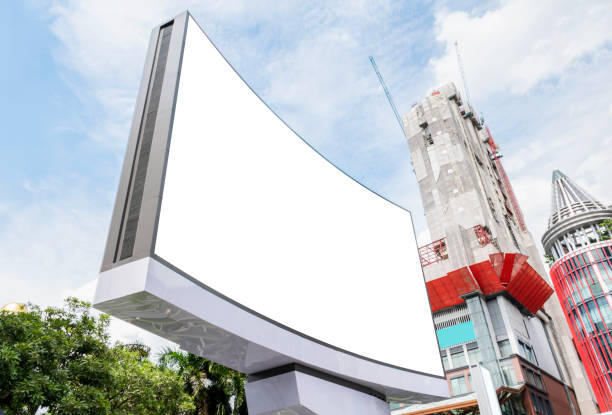
Generally, a professional flexibles LED-Anzeigefeld can safely achieve a minimum bending radius ranging from $50\Text{mm}$ Zu $200\Text{mm}$. This geometric capacity allows the soft modules to curve smoothly inward to form concave viewing spaces or wrap outward to create striking convex shapes. Folglich, you can adapt the display matrix to follow almost any unique layout design without distorting the underlying image pixels.
2. Strategic Value Analysis: Rigid Limitations vs. Flexible Solutions
Upgrading your digital media hardware from stiff metal frames to modular rubberized elements redefines your installation capabilities. Review this detailed operational matrix to see how flexible screens solve common structural design challenges:
| Commercial Venue Scenario | Conventional Rigid Display Limitations | Advanced Flexible Screen Solutions |
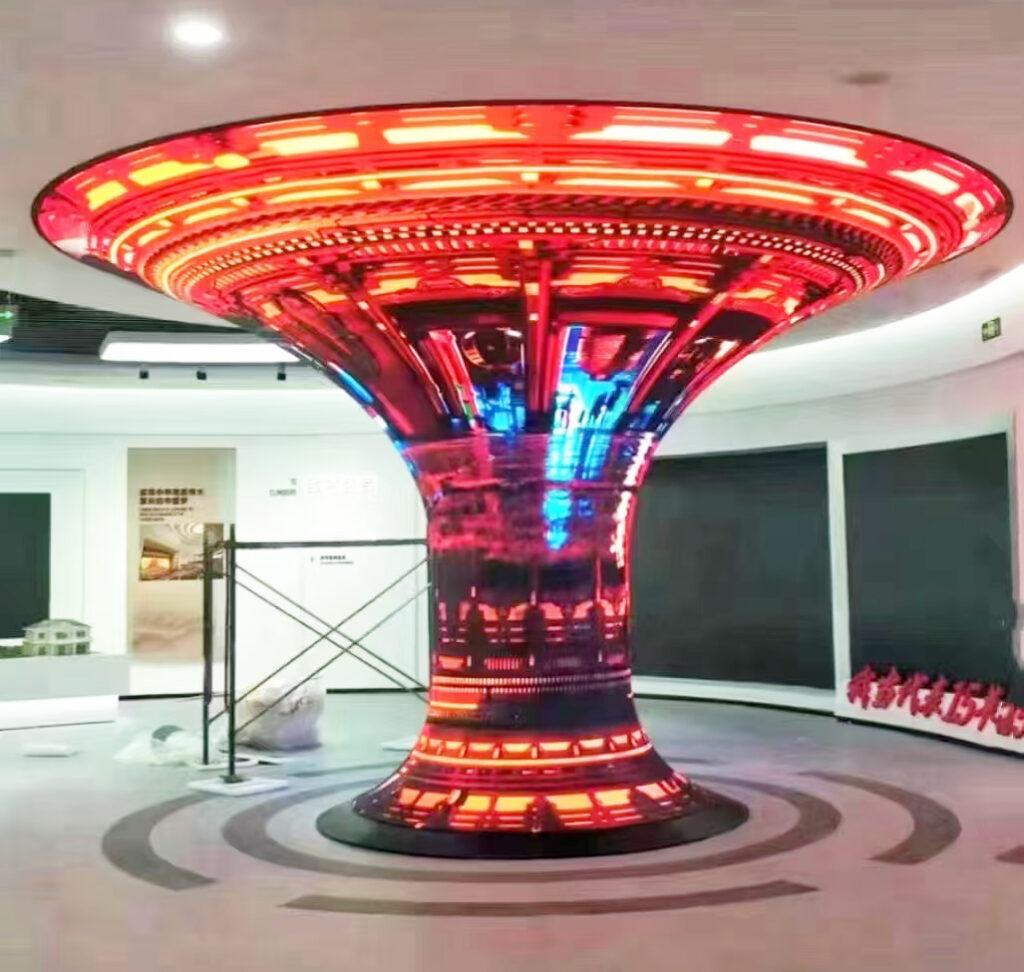
| Pillar and Column Wrapping | Requires multi-sided segmented boxes with ugly bezel seams. | Wraps smoothly to form a single, 360-degree viewing face. |
| Wave and S-Shape Accent Walls | Demands expensive, pre-formed, curved cabinet blocks. | Bends directly into shape across existing drywall waves. |
| Geometric Advertising Setups | Forces workers to assemble massive, heavy steel backframes. | Lightweight magnetic backplates install quickly on light brackets. |
| Mobile Exhibition Tours | Heavy crates require massive shipping space and long setup times. | Modules fold tightly into compact transit cases to cut logistics costs. |
3. Unlocking Architectural Freedom and Commercial Space Value
Replacing thick, boxy enclosures with ultra-thin creative modules simplifies your on-site building construction steps significantly.
Light Rubber Shell ──> Magnetic Surface Docking ──> ♻️ Eliminates Massive Steel Framing Needs
Traditional large displays require deep structural frames to support their heavy sheet-metal cabinets and power supplies safely. This bulk takes up valuable square footage in luxury retail boutiques, corporate lobbies, and airport walkways.
Im Gegensatz, our advanced thin-shell modules utilize high-strength neodymium magnets to mount directly onto slim, pre-curved iron frames. Because the display profiles measure only a few millimeters thick, they blend flush into the surrounding interior architecture like digital wallpaper. You save massive amounts of structural steel weight while keeping your prime commercial floor space wide open for customers.
4. Critical Engineering Metrics to Verify Before Sourcing Bulk Shipments
Procurement teams must evaluate long-term stress data rather than judging display products on superficial brightness specs alone.
                  Essential Technical Sourcing Milestones:
   ┌──────────────────────────────────────────────────────────────────┐
   │ 1. Minimum Radius Limit: Match module pliability to target walls.│
   ├──────────────────────────────────────────────────────────────────┤
   │ 2. Continuous Fatigue Data: Require proof of a 50k-hour lifespan.│
   └──────────────────────────────────────────────────────────────────┘
When writing your commercial component blueprints, always request detailed fatigue verification tests from your hardware manufacturer. A high-tier flexibles LED-Anzeigefeld must demonstrate its ability to maintain pristine pixel connections across thousands of physical flexing cycles.
Ensure that your chosen vendor provides certified laboratory documentation proving that the FPC substrate satisfies a 50,000-hour operational lifespan at your specific target curvature. Verifying these stress metrics early protects your investment, preventing early circuit traces from breaking and stopping dead pixels from ruining your video walls.
Abschluss: Future-Proof Your Digital Media Installations
Achieving premium architectural results requires investing in adaptive display systems that maximize installation freedom while ensuring excellent color uniformity.
Stop limiting your creative commercial projects with thick, boxy, rigid screen enclosures that force slow, expensive steel framing builds. Upgrading your corporate equipment catalog to our flexibles LED-Anzeigefeld solutions ensures absolute geometric freedom and a stunning cosmetic presentation. We build every single rubberized module to withstand continuous physical stress and maintain tight pixel alignments in any custom configuration.
Contact the XOBLED technical sales department today to request product samples and secure your next premium display solution.