


Cabinets d'architecture commerciale, créateurs d'événements de luxe, et les acheteurs de médias d'entreprise repoussent fréquemment les limites de l'intégration de l'affichage numérique. Lors de la planification d'un projet d'intérieur unique ou d'une campagne publicitaire de grande envergure, les responsables des achats sont confrontés à une question critique de configuration du matériel. Devriez-vous vous en tenir aux grilles de panneaux rigides traditionnelles, ou devriez-vous investir dans un panneau d'affichage LED flexible plutôt?
Alors que les armoires conventionnelles offrent d'excellentes performances sur les surfaces planes, ils limitent complètement votre créativité face à des murs courbes, piliers structurels, ou des pièces maîtresses géométriques. Choisir le mauvais cadre d'affichage peut obliger vos équipes d'ingénierie à créer des, structures de support en acier lourd. Ce guide technique détaille les limites physiques de courbure, valeurs d'intégration architecturale, et mesures de performances critiques des écrans numériques flexibles.
1. Limites physiques de la flexibilité: Comprendre le rayon de courbure
L'agilité architecturale d'un écran flexible repose sur des matériaux spécialisés plutôt que sur des circuits imprimés verre-époxy standard.
 Rigid Screen:    [Glass Epoxy Layer] ──> Resists Bending Forces ──> ❌ Cracks Under Stress
 Flexible Screen: [Rubber FPC Layer]  ──> Absorbs Contoured Shifts ──> ♻️ Seamless Curves
Les ingénieurs construisent ces modules adaptatifs à l'aide d'un système hautement flexible, Circuit imprimé flexible caoutchouté (FPC) couche de substrat. Cette composition technique haut de gamme permet à l'écran d'absorber les changements de contour physique sans briser les lignes de traceur en cuivre à l'intérieur..
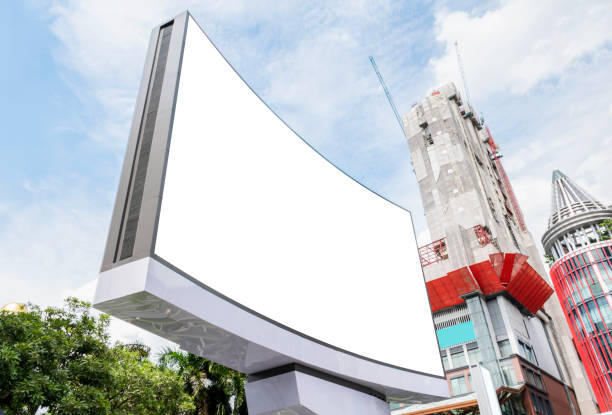
En général, un professionnel panneau d'affichage LED flexible peut atteindre en toute sécurité un rayon de courbure minimum allant de $50\texte{mm}$ à $200\texte{mm}$. Cette capacité géométrique permet aux modules souples de se courber doucement vers l'intérieur pour former des espaces de visualisation concaves ou de s'enrouler vers l'extérieur pour créer des formes convexes saisissantes.. Par conséquent, vous pouvez adapter la matrice d'affichage pour suivre presque n'importe quelle conception de mise en page unique sans déformer les pixels de l'image sous-jacente.
2. Analyse de la valeur stratégique: Limitations rigides vs. Solutions flexibles
La mise à niveau de votre matériel multimédia numérique, des cadres métalliques rigides aux éléments modulaires en caoutchouc, redéfinit vos capacités d'installation.. Consultez cette matrice opérationnelle détaillée pour voir comment les écrans flexibles résolvent les défis de conception structurelle courants.:
| Scénario de lieu commercial | Limites des écrans rigides conventionnels | Solutions avancées d'écrans flexibles |
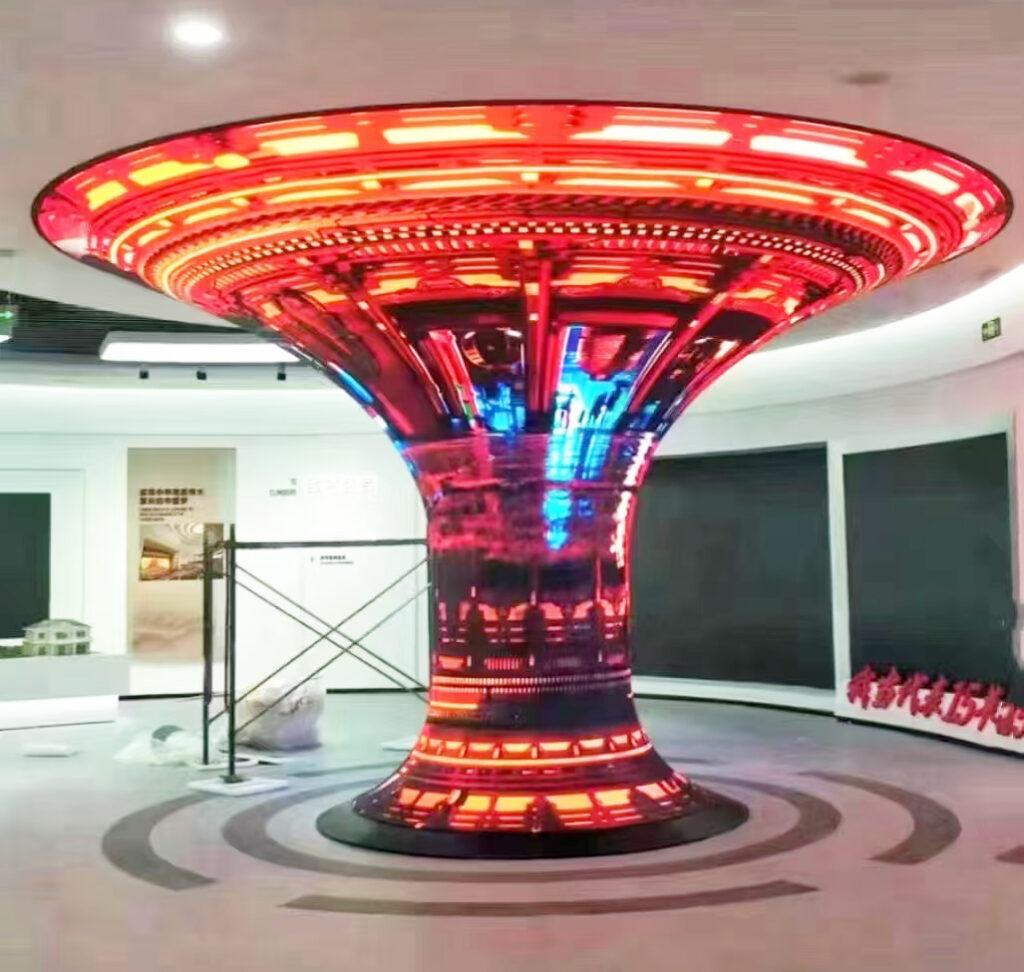
| Emballage de piliers et de colonnes | Nécessite des boîtes segmentées à plusieurs côtés avec des coutures laides. | S'enroule en douceur pour former un seul, 360-visage de visualisation de degré. |
| Murs d’accent ondulés et en forme de S | Exige cher, préformé, blocs d'armoires incurvés. | Se plie directement en forme sur les vagues de cloisons sèches existantes. |
| Configurations publicitaires géométriques | Oblige les travailleurs à se rassembler massivement, cadres arrières en acier lourd. | Les plaques arrière magnétiques légères s'installent rapidement sur les supports d'éclairage. |
| Visites d'expositions mobiles | Les caisses lourdes nécessitent un espace d'expédition énorme et de longs temps d'installation. | Les modules se replient étroitement dans des valises de transport compactes pour réduire les coûts logistiques. |
3. Libérer la liberté architecturale et la valeur de l’espace commercial
Remplacement épais, les boîtiers carrés dotés de modules créatifs ultra-fins simplifient considérablement les étapes de construction de vos bâtiments sur site.
Light Rubber Shell ──> Magnetic Surface Docking ──> ♻️ Eliminates Massive Steel Framing Needs
Les grands écrans traditionnels nécessitent des cadres structurels profonds pour supporter en toute sécurité leurs lourdes armoires en tôle et leurs alimentations.. Cette masse occupe une superficie précieuse dans les boutiques de luxe., lobbys d'entreprise, et passerelles d'aéroport.
En revanche, nos modules avancés à coque fine utilisent des aimants en néodyme haute résistance pour être montés directement sur des supports minces, cadres en fer pré-courbé. Parce que les profils d'affichage ne mesurent que quelques millimètres d'épaisseur, ils se fondent dans l'architecture intérieure environnante comme un papier peint numérique. Vous économisez des quantités considérables de poids en acier de construction tout en gardant votre principal espace commercial grand ouvert aux clients..
4. Mesures d'ingénierie critiques à vérifier avant de procéder à des expéditions en vrac
Les équipes d'approvisionnement doivent évaluer les données de stress à long terme plutôt que de juger les produits d'affichage sur la seule base de spécifications de luminosité superficielles..
                  Essential Technical Sourcing Milestones:
   ┌──────────────────────────────────────────────────────────────────┐
   │ 1. Minimum Radius Limit: Match module pliability to target walls.│
   ├──────────────────────────────────────────────────────────────────┤
   │ 2. Continuous Fatigue Data: Require proof of a 50k-hour lifespan.│
   └──────────────────────────────────────────────────────────────────┘
Lors de la rédaction de vos plans de composants commerciaux, demandez toujours des tests de vérification de fatigue détaillés à votre fabricant de matériel. UN haut niveau panneau d'affichage LED flexible doit démontrer sa capacité à maintenir des connexions de pixels impeccables sur des milliers de cycles de flexion physique.
Assurez-vous que le fournisseur que vous avez choisi fournit une documentation de laboratoire certifié prouvant que le substrat FPC satisfait à un 50,000-heure durée de vie opérationnelle à votre courbure cible spécifique. La vérification précoce de ces mesures de stress protège votre investissement, empêchant les premières traces de circuit de se briser et empêchant les pixels morts de ruiner vos murs vidéo.
Conclusion: Pérennisez vos installations de médias numériques
Pour obtenir des résultats architecturaux haut de gamme, il faut investir dans des systèmes d'affichage adaptatifs qui maximisent la liberté d'installation tout en garantissant une excellente uniformité des couleurs..
Arrêtez de limiter vos projets commerciaux créatifs avec du épais, carré, boîtiers d'écran rigides qui forcent à ralentir, constructions de charpente en acier coûteuses. Mise à niveau de votre catalogue d'équipement d'entreprise vers notre panneau d'affichage LED flexible solutions garantit une liberté géométrique absolue et une présentation cosmétique époustouflante. Nous construisons chaque module caoutchouté pour résister à un stress physique continu et maintenir des alignements de pixels serrés dans n'importe quelle configuration personnalisée..
Contactez dès aujourd'hui le service technico-commercial de XOBLED pour demandez des échantillons de produits et sécurisez votre prochaine solution d'affichage haut de gamme.