


En la industria de la exhibición comercial, Hay un mito persistente que “más brillante siempre es mejor.” Impulsado por las especificaciones de marketing de vallas publicitarias exteriores y escaparates comerciales con mucha luz ambiental., many project managers and procurement officers blindly chase high-nit ratings when specifying fine-pitch LED video walls. Sin embargo, transferir esta mentalidad de brillo exterior a un ambiente cerrado, high-density indoor environment is a recipe for operational failure.
In critical environments like 24/7 mission-critical control rooms and professional broadcast television studios, excessive brightness is not an asset—it is a liability. For these specialized applications, industrial display engineers have established that a 500 nits indoor LED screen represents the absolute “sweet spot.”
This technical guide will break down the visual physics of why 500 cd/m² (liendres) provides the ultimate balance between high-fidelity image contrast and long-term ocular safety, and why exceeding this threshold actively degrades operator performance and broadcast camera quality.
1. The Human Factor: Control Room Visual Fatigue and the Over-Brightness Trap
Control room operators manage critical responsibilities throughout long 8- to 12-hour shifts. During this time, they continuously monitor dense, data-heavy content such as traffic systems, security networks, and power plant telemetry. To improve screen visibility and maintain concentration, facilities usually keep ambient lighting at low to moderate levels, typically between 100 y 300 lux. Como resultado, operators can focus more effectively on detailed visual information across multiple displays.
The Physics of Ocular Strain
When operators set an LED video wall above 800 or 1,000 nits in a dim command center, the screen creates excessive luminance contrast against the dark surroundings. Como resultado, the human eye must constantly adjust between the intense screen brightness and the low-light environment. This continuous adaptation forces the iris muscles to contract and dilate repeatedly, which directly increases the risk of control room visual fatigue. Además, prolonged exposure can reduce viewing comfort and negatively affect operator concentration during critical monitoring tasks. Symptoms include:
-
Severe eye strain and tension headaches.
-
Dry eye syndrome is caused by a reduced blink rate when staring at high-intensity light.
-
Decreased long-term cognitive awareness increases the risk of critical operational errors.
Por qué 500 Nits Protects the 24/7 Operator
A maximum brightness of 500 nits matches the ergonomic luminance curves required for indoor, close-proximity viewing. It allows data points, complex line graphs, and multi-window video streams to appear sharp and vibrant without emitting a harsh, fatiguing glow. By implementing the best brightness for control room display systems, facilities can ensure their workforce remains sharp, alert, and comfortable across consecutive 24/7 shifts.
2. The Broadcast Challenge: Studio LED Panel Broadcast Grade Optics
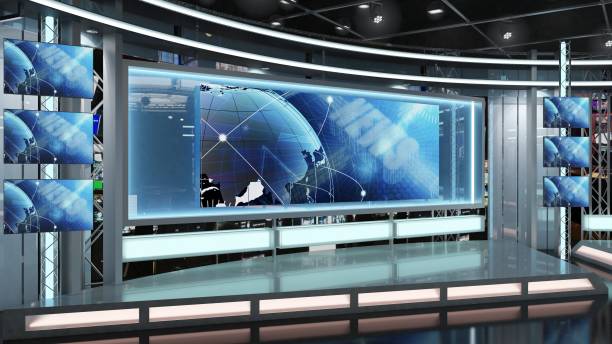
While control rooms prioritize human eye comfort, television and virtual production studios must prioritize the “eye” of the camera. Designing a studio LED panel broadcast-grade screen requires resolving a completely different set of optical hurdles.
Eliminating the Moire Effect and Mismatched Exposure
In modern broadcast studios, cameras rely on precise aperture and shutter settings to maintain balanced image quality. When an LED background wall operates at excessive brightness, it forces camera operators to reduce the lens aperture or increase shutter speed to compensate. Como resultado, the studio lighting becomes unbalanced. The on-screen talent may appear underexposed and covered in harsh shadows, while the LED background can become overexposed and turn into a distracting white glare. Como consecuencia, this imbalance damages the overall visual quality and weakens the intended digital set design.
Maintaining Color Integrity at 500 Nits
The engineering challenge of dropping an LED panel’s brightness down to 500 nits is maintaining color depth. In cheap, standard LED panels, reducing the brightness usually results in a severe loss of grayscale resolution. The colors become muddy, and dark gradients dissolve into blocky, pixelated artifacts.
Premium fine-pitch LED displays solve this with advanced low-brightness, high-grayscale driver ICs. Even when calibrated down to a comfortable 500 liendres, the screen retains a true 16-bit depth or higher, ensuring that deep blacks, vibrant skin tones, and subtle gradients remain perfectly color-accurate for broadcast television, as illustrated below:
[ Traditional LED Panel ]
Lowering Brightness ===> Drops Grayscale ===> Muddy Colors & Lost Detail ❌

[ XOBLED High-Grayscale Integration ]
Lowering Brightness (500 Nits) ===> Stabilized Driver ICs ===> Perfect 16-Bit Color Depth Layering
3. The Synchronization Equation: High Refresh Rates vs. Camera Flicker
Achieving the perfect 500-nits luminance is only half the battle. To be truly broadcast-grade, the display must operate seamlessly with high-speed camera sensors without causing on-screen artifacts.
The Danger of Low-Frequency Scanning
LED screens adjust their perceived brightness using Pulse Width Modulation (PWM)—turning pixels on and off at speeds imperceptible to the human eye. Sin embargo, if the refresh rate of this modulation is too low, a broadcast camera shooting at 24fps, 30fps, or 60fps will capture those dark intervals. This results in highly distracting black horizontal bars, rolling scan lines, or intense color flickering on the recorded footage.
+------------------------------------------------------------------------+
|  Operational Performance Specifications for Indoor Mission-Critical LED |
+------------------------------------------------------------------------+
| Feature Metric        | Standard Commercial LED | Command & Studio Grade  |
+-----------------------+-------------------------+------------------------+
| Optimal Brightness    | 800 - 1,200 nits        | 400 - 500 nits         |
| Refresh Rate          | 1,920 Hz                | ≥ 3,840 Hz - 7,680 Hz  |
| Grayscale Retention   | Drops below 50% light   | Full 16-Bit at 500 nits|
| Thermals & Lifespan   | High heat, rapid decay  | Low thermals, 100k hrs |
+-----------------------+-------------------------+------------------------+
By pairing a 500 nits indoor LED screen with an ultra-high refresh rate of 3,840Hz to 7,680Hz, the display cycles fast enough to stay perfectly synchronized with any professional broadcast camera shutter. This ensures zero artifact interference, perfectly smooth pans, and pristine digital backgrounds for live television networks.
4. Thermals and Longevity: The Secondary Benefits of Moderate Luminance
Beyond visual ergonomics and camera compatibility, locking your indoor display configuration to 500 nits delivers massive structural and financial benefits to a facility’s engineering infrastructure.
Reducing Heat Generation in Closed Spaces
LEDs generate heat proportional to the current driving them. Running a massive video wall at excessive brightness transforms the display into a giant space heater. In a closed control room, this spikes the ambient room temperature, forcing the facility’s HVAC systems to run continuously, which introduces loud fan noise and drives up electricity costs.
Extending the Half-Life of the Micro-LED Pixels
Driving diodes at maximum capacity accelerates their chemical degradation. It leads to uneven color shifting, pixel burnout, and premature brightness decay over time. Operating an LED video wall at a calibrated 500 nits reduces thermal stress on the components, ensuring the system reaches its full 100,000-hour operational lifespan without requiring expensive premature panel replacements.
Conclusión: Engineering Intentional Displays Over Raw Numbers
In mission-critical monitoring centers and professional broadcast environments, precision and balance define true engineering excellence. Simply choosing an ultra-high-brightness display for indoor use does not guarantee better performance. In fact, excessive brightness often increases operating costs, reduces viewing comfort, and negatively affects camera output quality.
Instead, modern facilities should prioritize display performance that supports both visual accuracy and long-term usability. By selecting a high-refresh, low-latency 500 nits indoor LED screen, operators achieve clear image reproduction, stable broadcast visuals, and a more comfortable viewing experience.
Además, optimized brightness levels help maintain accurate color performance while eliminating camera scan lines during filming and live production. Al mismo tiempo, the ergonomic display profile reduces eye strain and supports operator focus during extended working hours.
Como resultado, a professionally engineered indoor LED solution delivers the precise balance of performance, comfort, and reliability required in today’s advanced monitoring and broadcast applications.
Optimize your control space or studio environment with intentional, calibrated visual hardware. Learn more about the engineering of precision, fine-pitch indoor video systems at XOBLED Displays and elevate your facility’s operational capabilities today.