


Planificateurs municipaux, promoteurs immobiliers commerciaux, et les réseaux de publicité extérieure sont confrontés à d'importants défis d'ingénierie lors de la maintenance de l'infrastructure électronique pendant les vagues de chaleur estivales extrêmes.. Parce que d’énormes panneaux d’affichage numériques restent exposés à la lumière directe du soleil pendant des heures, choisir un très durable écran d'affichage à LED extérieur de la ville cadre est essentiel pour éviter les coupures thermiques. Par conséquent, les responsables des achats d'entreprise soulèvent fréquemment de sérieuses questions mécaniques pendant la phase d'évaluation du matériel, poser une question critique: “Les grands écrans numériques extérieurs surchauffent-ils lorsque les températures ambiantes estivales dépassent 40°C, et un boîtier structurel sans ventilateur peut-il véritablement fournir des performances de refroidissement fiables sous un rayonnement solaire intense sans s'écraser?”
L'achat d'un panneau d'affichage numérique mal refroidi entraîne une dégradation rapide des diodes, étranges changements de couleur, et remplacements de composants coûteux pendant les saisons opérationnelles de pointe. Inversement, configurations de base sur-ingénierie avec bruit, les ventilateurs mécaniques nécessitant beaucoup d'entretien augmentent vos coûts mensuels de services publics et introduisent plusieurs points de défaillance physiques dans votre système. Ce guide technique B2B complet quantifie la manière dont la chaleur endommage la durée de vie des diodes., évalue les exigences techniques des structures sans ventilateur, et détaille les signes avant-coureurs du stress thermique.
La thermodynamique de l'affichage numérique: Pourquoi la chaleur tue la durée de vie des diodes
Pour protéger vos investissements en matière de réseau média, votre équipe technique doit analyser comment les températures élevées dégradent les diodes électroluminescentes au niveau moléculaire. La chaleur est l’ennemi numéro un de l’électronique à semi-conducteurs, ce qui signifie que la stabilité visuelle de votre écran d'affichage LED extérieur de la ville dépend directement du maintien des températures internes stables. Quand le courant électrique traverse une puce LED, la jonction semi-conductrice génère une chaleur perdue importante qui doit s'échapper immédiatement.
Si la température de jonction interne augmente de seulement 10°C au-dessus de sa valeur optimale, le taux de dépréciation permanente du lumen s'accélère d'environ deux fois. Quand les températures ambiantes estivales dépassent les 45°C, l'infrastructure de refroidissement sous-jacente doit fonctionner parfaitement pour éviter les dommages structurels. Ne pas éliminer cette énergie thermique piégée dégrade rapidement les couches de phosphore internes, provoquant une atténuation prématurée de l'écran et réduisant la durée de vie de fonctionnement standard de 100 000 heures à une fraction de son potentiel d'origine.
La réalité des boîtiers sans ventilateur: Quand pouvez-vous éliminer en toute sécurité la ventilation mécanique?
De nombreux fournisseurs de matériel vantent largement les avantages des écrans extérieurs sans ventilateur, soulignant leur fonctionnement silencieux, consommation d'énergie réduite, et une protection étanche contre la poussière et l'humidité. Cependant, les responsables des achats doivent comprendre qu'une configuration sans ventilateur ne fonctionne de manière fiable que dans des conditions de conception spécifiques plutôt que de servir de solution universelle pour tous les types de panneaux d'affichage.
[Standard Solid LED Panel] ---> High Power Draw ---> Generates Deep Internal Heat ---> Requires Active Fans
[Mesh / Transparent Panel] ---> High Air Permeability ---> Low Power Draw ---> Safely Uses Fanless Cooling
Les ingénieurs ne peuvent mettre en œuvre en toute sécurité une conception totalement sans ventilateur que lorsque l'écran est doté d'un système hautement spécialisé., architecture basse consommation ou structure physiquement ouverte. Par exemple, les panneaux architecturaux en maille et les écrans en verre transparent utilisent un espacement ouvert qui permet à l'air ambiant naturel de circuler directement à travers le module, évacuer la chaleur naturellement.
En plus, ces conceptions spécialisées utilisent des systèmes de distribution d'énergie à cathode commune très efficaces qui réduisent considérablement la consommation d'énergie globale et réduisent la génération de chaleur de base. Pour la norme, panneaux publicitaires à face solide et haute luminosité, compter uniquement sur le refroidissement passif par temps de 40 °C crée un piège thermique dangereux. Ces installations robustes nécessitent un, des systèmes de ventilation intelligents ou des unités de climatisation intégrées pour expulser efficacement la chaleur du châssis en aluminium scellé.
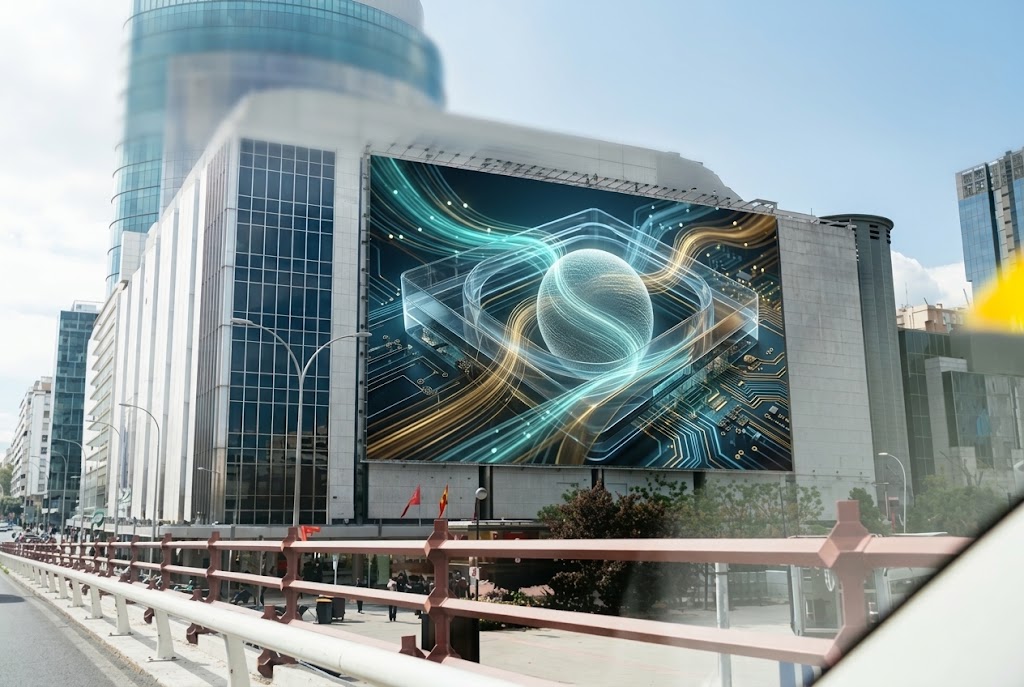
Reconnaître les panneaux d'avertissement thermiques critiques sur la surface d'affichage
Les techniciens de terrain et les opérateurs de réseau doivent surveiller de près leurs réseaux d'écrans extérieurs pendant les mois de pointe de l'été pour détecter les problèmes de performances liés à la chaleur avant qu'ils ne provoquent une panne totale du système..
-
Surchauffe localisée du module: Lorsque des cartes de numérisation internes ou des blocs d'alimentation spécifiques commencent à se déformer à cause de la chaleur, les modules LED correspondants sur la surface avant seront inhabituellement chauds, créer des zones visibles d'images déformées.
-
Dérive importante de la température de couleur: La chaleur extrême modifie la résistance électrique du rouge, vert, et des diodes bleues à des rythmes complètement différents. Ce déséquilibre entraîne une dérive notable de la balance des blancs de l’écran., transformer des publicités nettes en boue, écrans anormalement verts ou teintés de rose.
-
Gradation automatisée de la luminosité de sécurité: Les écrans commerciaux intelligents intègrent des capteurs thermiques internes qui déclenchent des protocoles de sécurité de protection lorsque les niveaux de chaleur atteignent leur maximum.. Le système diminue automatiquement la luminosité de l’écran 30% à 50% pour réduire la consommation d'énergie, qui maintient l'écran en vie mais laisse vos annonces pâles et délavées en plein soleil.
Cadre d'approvisionnement stratégique pour les responsables des achats B2B
Les acheteurs professionnels peuvent garantir d'excellentes marges de sécurité opérationnelle et maintenir des performances élevées en suivant trois règles strictes en matière d'approvisionnement pendant le processus d'appel d'offres.:
-
Vérifier les plages de fonctionnement environnementales certifiées: N'achetez pas de matériel sur la base d'affirmations de performances génériques. Exigez toujours des documents de test certifiés prouvant que l'équipement fonctionne parfaitement dans une plage de température claire., généralement de -20°C à +50°C.
-
Insistez sur des schémas d’ingénierie thermique détaillés: Pour les projets prévus pour chaud, régions ensoleillées, exiger de votre partenaire de fabrication qu'il fournisse une cartographie de simulation thermique complète montrant exactement comment l'air se déplace à travers le châssis interne.
-
Privilégiez les matériaux de coque en aluminium de qualité supérieure.: Évitez les boîtiers de modules en plastique bon marché qui se déforment et emprisonnent la chaleur avec le temps.. Spécifiez plutôt des plaques arrière en alliage d'aluminium moulé sous pression de haute qualité, qui servent de très efficace, dissipateurs de chaleur naturels qui accélèrent la dissipation thermique sur tout le cadre de l'écran.
Conclusion: Sécurisez votre réseau multimédia contre les conditions météorologiques extrêmes
En conclusion, la mise à l'échelle d'un réseau publicitaire municipal ou d'un réseau de panneaux d'affichage en bordure de route très rentable nécessite de se procurer du matériel électronique robuste qui résiste facilement aux environnements estivaux difficiles..
Arrêtez de risquer vos contrats de diffusion de médias, marges de garantie, et la réputation de la marque de l'entreprise sur les écrans numériques de bas niveau qui déforment les couleurs, assombrir, ou subir une panne de courant complète lors de fortes vagues de chaleur estivales. Mise à niveau de votre infrastructure visuelle vers notre haute performance écran d'affichage à LED extérieur de la ville plates-formes garantit un excellent contrôle thermique, beau rendu des couleurs, et un fonctionnement continu dans tous les climats. Nous concevons chaque armoire en aluminium et calibrons chaque boucle de refroidissement intelligente pour satisfaire aux normes internationales strictes de durabilité.. Contactez notre division d'ingénierie d'affichage extérieur dès aujourd'hui pour soumettre vos profils météorologiques régionaux et recevoir un plan détaillé de configuration de l'équipement..